
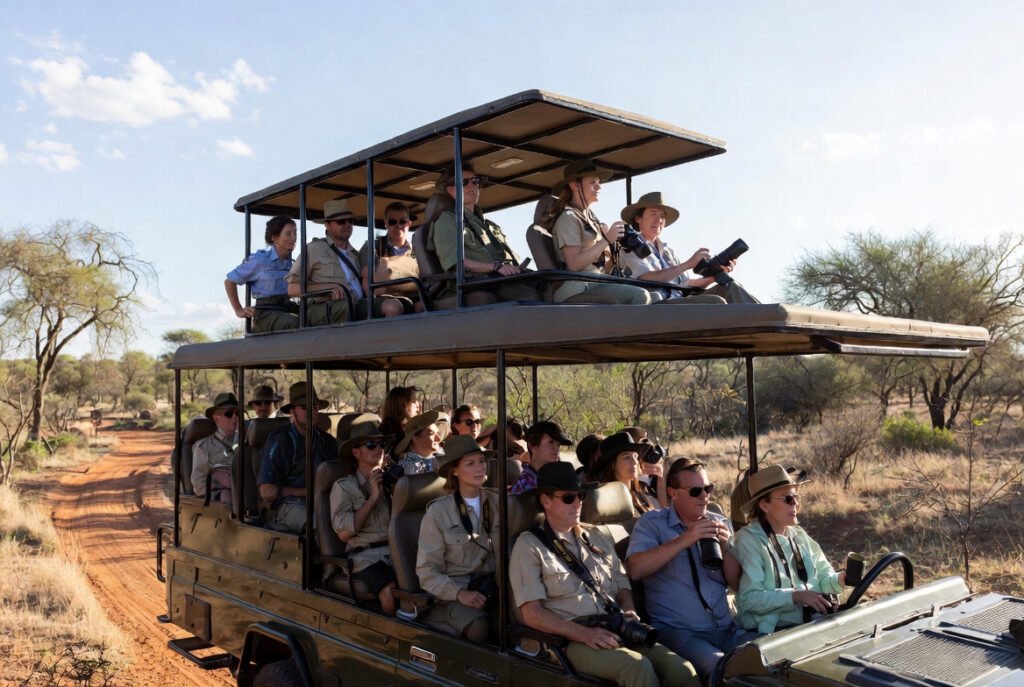
A safari in Yala typically begins in the pre-dawn darkness, as visitors gather at the park gates in open-top jeeps. As the sun rises, painting the sky in shades of orange and gold, the gates open and the adventure begins.
The experience is sensory and immediate. Dust rises from the tracks as vehicles navigate the network of roads that crisscross the park. The air carries the scent of dry earth and vegetation. Every bend in the road brings anticipation, every rustle in the bushes prompts craned necks and raised cameras.
Experienced safari drivers and trackers are essential to the experience. They read the landscape with practiced eyes, interpreting paw prints in the dust, alarm calls from deer, and the behavior of birds to locate wildlife. Their knowledge transforms a simple drive through the park into a masterclass in ecology and animal behavior.
Most visitors explore Block 1, the park’s most accessible and wildlife-rich section, but Yala comprises five blocks, each with its own character. The more remote blocks offer quieter experiences for those willing to venture further from the crowds.
Essential Safari Tips for Success
What to Wear
Clothing choices significantly impact your comfort during a safari. Neutral colors work best—khaki, olive green, beige, and brown help you blend into the environment and avoid startling wildlife. Avoid bright colors, particularly white (which shows dust immediately), red, and neon shades that can be visible from long distances.
Long, lightweight pants and long-sleeved shirts protect against sun exposure and provide a barrier against insects and thorny vegetation if you need to brush against branches. Cotton or moisture-wicking fabrics work well in the heat. During the cooler months (December to February) or for early morning safaris year-round, bring a light jacket or fleece—temperatures can be surprisingly cool at dawn, and the wind chill in a moving vehicle adds to the cold.
Footwear should be comfortable closed-toe shoes or light hiking boots. You’ll spend most of your time seated, but you may need to step out at designated spots, and the terrain can be uneven. Sandals or flip-flops are impractical and offer no protection from insects or rough ground.
A wide-brimmed hat is essential for sun protection, but secure it well—the wind in a moving jeep can send hats flying. A buff or lightweight scarf serves multiple purposes: sun protection for your neck, a dust mask when vehicles kick up clouds of dirt, and warmth in the early morning.
What to Pack
Sunscreen is non-negotiable, even on overcast days. The tropical sun is intense, and you’ll be exposed for hours. Reapply regularly, especially on your face, neck, and arms. Sunglasses with UV protection reduce glare and eye strain, and polarized lenses help you spot wildlife near water by cutting through surface reflections.
Insect repellent protects against mosquitoes and other biting insects, though mosquitoes are less of an issue during the hot, dry months. The greatest mosquito activity occurs during the green season and near dawn and dusk.
Water is critical—bring at least two liters per person for a full-day safari. Dehydration happens quickly in the heat, and while most safari operators provide some water, bringing your own ensures you have enough. Avoid alcohol before or during safaris, as it accelerates dehydration.
Snacks provide energy during long stretches between wildlife sightings. Pack items that won’t melt (chocolate becomes soup in Yala’s heat) and that don’t create excessive wrapper noise that might disturb animals. Nuts, dried fruit, energy bars, and cookies work well.
Binoculars transform the experience, allowing you to observe distant wildlife and appreciate details invisible to the naked eye. Even basic 8×32 or 10×42 binoculars make a significant difference. Share them with travel companions if only one person brings a pair—spotting an animal and being unable to see it clearly is frustrating.
A camera with a telephoto lens captures memories, though don’t let photography consume your experience. Sometimes it’s better to watch and absorb the moment rather than viewing everything through a viewfinder. Bring extra batteries and memory cards—both deplete faster than expected when shooting extensively. A bean bag or similar support helps stabilize telephoto lenses in the bouncing jeep.
Safari Etiquette: Respecting Wildlife and Fellow Visitors
Silence is golden when approaching wildlife. Loud conversations, shouting, and excessive noise disturb animals and ruin the experience for everyone. Speak in hushed tones, and if you must communicate, do so quietly. The rustle of a plastic bag or the beep of a camera can send skittish animals fleeing.
Never ask your driver to drive off-road or closer to animals than regulations allow. Yala has designated tracks for good reason—off-road driving damages fragile ecosystems, creates erosion, and disturbs wildlife. Drivers who break these rules should be reported, not encouraged with tips.
Don’t litter. This should go without saying, but unfortunately, some visitors leave trash behind. Keep all wrappers, bottles, and waste with you and dispose of them properly outside the park. Animals investigate discarded items, which can injure or poison them.
Respect animal behavior and space. If an animal shows signs of stress—flattened ears on an elephant, a leopard getting up and moving away, birds giving alarm calls—ask your driver to back off. Your presence should be neutral, neither causing distress nor altering natural behavior.
When multiple vehicles gather at a sighting, be patient and courteous. Everyone deserves a view and photo opportunity. Don’t block other vehicles’ sightlines, and if you’ve had time to observe and photograph, consider moving on to let others have a turn, especially if more jeeps are arriving.
Stay seated and keep arms inside the vehicle unless your guide explicitly says it’s safe to stand. Animals perceive the vehicle as a single large entity; standing or extending limbs breaks that silhouette and can trigger defensive or curious responses. Never exit the vehicle except at designated picnic spots or rest areas.
Maximizing Your Wildlife Sightings
Book the earliest possible safari slot. The park gates open at 6:00 AM (times vary slightly by season), and being among the first vehicles in dramatically improves your chances of sightings. Animals are most active in the cool morning hours, and you’ll have trails to yourself before crowds arrive.
Choose your safari operator carefully. Experienced drivers know the park intimately, understand animal behavior, and have networks of communication with other drivers about recent sightings. The cheapest option often means an inexperienced driver in a poorly maintained vehicle. Read reviews, ask other travelers for recommendations, and prioritize experience over price.
Practice patience. Wildlife viewing isn’t a theme park with scheduled shows. You might spend 20 minutes watching a waterhole with no activity, then suddenly have elephants, deer, crocodiles, and birds all appear at once. Rushing from spot to spot hoping to “find” animals is less effective than reading the landscape and waiting strategically.
Learn to read signs. Your driver will point out tracks, scat, and other evidence of animal presence, but you can train yourself to notice these clues too. Fresh leopard paw prints in the dust mean a cat passed recently. Birds giving alarm calls often indicate a predator nearby. Disturbed vegetation or broken branches suggest elephants fed in the area.
Look everywhere, not just at eye level. Leopards rest on rocks and in trees.
Birds perch on high branches. Monitor lizards bask beside the road. Some of the best sightings come from scanning all levels of the environment—ground, mid-level vegetation, and canopy.
Ask questions. Good guides love sharing their knowledge. Ask about animal behavior, plant uses, ecological relationships, and the driver’s personal experiences. This engagement transforms a simple wildlife viewing trip into an educational experience and often prompts guides to share information they might not volunteer otherwise.
Consider full-day safaris. While they’re more expensive and tiring, full-day trips allow you to experience the park when most tourists have left. Midday, though hot, can be productive around water sources, and you’ll often have sightings to yourself.
Manage expectations. Leopard sightings, while common in Yala, aren’t guaranteed. You might see five leopards or none. Accept that uncertainty as part of the wild experience. Every safari offers something—perhaps not the headline predator, but beautiful landscapes, interesting bird behavior, elephant interactions, or simply the privilege of spending time in nature.
Return for multiple safaris. Each outing offers different experiences. The park reveals itself gradually, and repeat visits often yield the sightings that eluded you initially. Many visitors who see a leopard on their third safari appreciate the build-up and anticipation that made that sighting even more special.