
Photographing Yala National Park: Complete Guide to Wildlife Photography
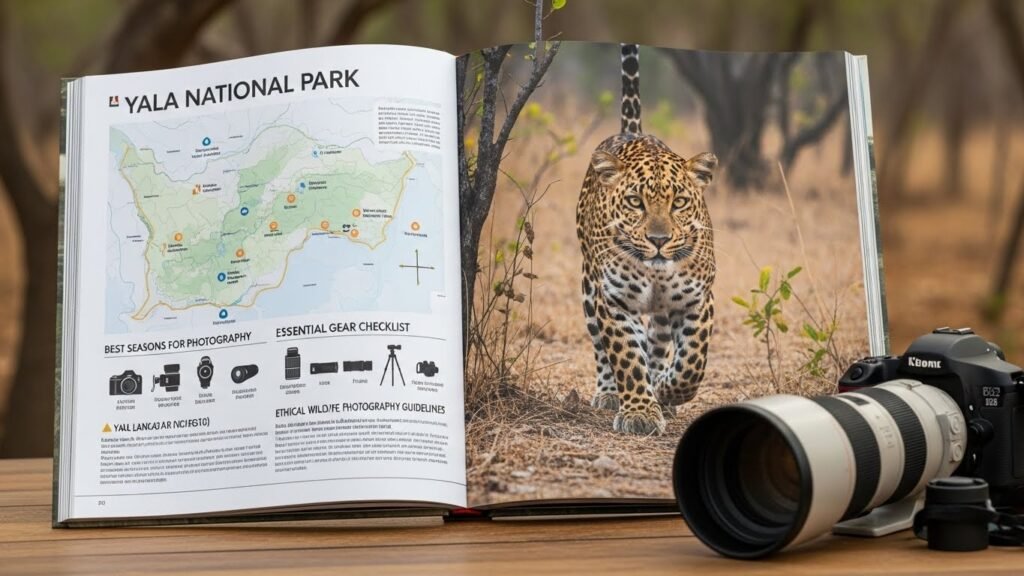
Yala National Park presents both exceptional opportunities and unique challenges for wildlife photographers. The combination of high leopard density, open terrain, and habituated wildlife creates scenarios that photographers dream about. However, the harsh light, dust, vehicle vibrations, and unpredictable animal behavior demand technical knowledge and adaptability. This guide covers everything from essential gear to advanced techniques for capturing Yala’s wildlife at its best. Essential Camera Gear Camera Bodies A camera with fast autofocus, good high-ISO performance, and decent burst rate is essential for wildlife photography. Modern mirrorless cameras excel in Yala’s conditions, offering silent shooting modes that don’t disturb animals, excellent autofocus tracking, and in-body stabilization that helps when shooting from moving vehicles. What you need: Ideally, bring two camera bodies—one for telephoto work and another with a shorter lens for landscapes and closer encounters. This eliminates lens-changing in dusty conditions and ensures you never miss a shot because you have the wrong lens mounted. If budget or weight limits you to one body, prioritize a camera with weather sealing and strong autofocus performance. Settings optimization: Set your camera to back-button focus (separating focus from the shutter button), which gives you better control over focus tracking. Use continuous autofocus mode with subject tracking for moving animals. Enable your camera’s fastest burst mode for action sequences. Most importantly, shoot in RAW format—Yala’s challenging light conditions mean you’ll need maximum flexibility in post-processing. Lenses: The Most Critical Decision Lens selection makes or breaks wildlife photography in Yala. The open terrain means animals are often distant, requiring serious reach. The ideal setup: A 400mm f/5.6 or 500mm f/5.6 lens for wildlife, paired with a 24-70mm or 24-105mm for landscapes and context shots. Full-frame users get the focal lengths as marked; crop-sensor users benefit from the 1.5x or 1.6x multiplier, making a 300mm effectively 450-480mm. Budget alternatives: If 400mm+ lenses are beyond budget, a 70-300mm or 100-400mm zoom provides versatility. You won’t get frame-filling leopard shots from distance, but these lenses still capture excellent images of closer wildlife and offer flexibility for various situations. Teleconverters (1.4x or 2x) extend reach but reduce light-gathering ability and autofocus speed—use them judiciously. Wide-angle importance: Don’t neglect wide-angle capability. Some of Yala’s most compelling images show animals in their landscape context—a leopard on a rock with scrubland stretching to the horizon, or an elephant herd at a lagoon against dramatic skies. A 16-35mm or 24mm prime captures these environmental portraits beautifully. What NOT to bring: Heavy, extreme telephoto lenses (600mm+) become burdensome in Yala’s heat and vehicle constraints. Unless you’re a professional wildlife photographer with support systems, stick with more manageable focal lengths. Similarly, avoid bringing too many lenses—dust is the enemy, and every lens change risks getting particles on your sensor. Essential Accessories Bean bags: These are absolutely critical and arguably more important than a tripod. A good bean bag (or two—one large, one small) stabilizes telephoto lenses on the jeep’s frame or door, dramatically improving sharpness. You can bring empty bags and fill them with rice or lentils at your accommodation, then empty them before departure to save luggage space and weight. Lens cloths and cleaning supplies: Dust infiltrates everything in Yala. Bring multiple microfiber cloths, a lens cleaning solution, a rocket blower for removing dust without touching lens surfaces, and lens pens. Clean your gear each evening—accumulated dust degrades image quality and can damage equipment. Extra batteries and memory cards: Bring at least three batteries per camera body. High burst rates, live view usage, and LCD screen reviews drain batteries faster than you expect. Memory cards should be high-speed (minimum 150MB/s write speed) and ample capacity—budget 64-128GB per day of shooting. Always format cards in-camera before each safari. Protective gear: A rain cover for your camera protects against unexpected downpours during green season. Even in dry season, a simple plastic bag or shower cap can protect gear from dust when driving between locations. A UV or clear protective filter on each lens safeguards expensive front elements from scratches, dust, and impacts. Support and comfort: A padded camera strap or harness distributes weight during long days. Consider a photographer’s vest with multiple pockets for quick access to memory cards, batteries, and cleaning supplies without digging through bags. Understanding Yala’s Light Light makes or breaks wildlife photographs, and Yala’s tropical location creates both opportunities and challenges. The Golden Hours The first and last hours of daylight provide the most beautiful, flattering light for wildlife photography. Dawn light (6:00-7:30 AM) is soft, warm, and directional, creating modeling on animal features and bringing landscapes alive with color. Similarly, late afternoon light (4:30-6:00 PM) paints subjects in golden tones and creates long shadows that add drama and depth. Why it matters: Side-lighting during golden hours reveals texture in fur and feathers, creates catchlights in animals’ eyes that bring portraits to life, and produces images with three-dimensional quality lacking in harsh midday light. Schedule your safaris to maximize these prime hours. Technical approach: During golden hours, you can often shoot at lower ISOs (400-800) while maintaining fast shutter speeds. The directional light allows for proper exposure of both subject and background, reducing the need for significant post-processing adjustments. The Midday Challenge Between 10:00 AM and 3:00 PM, Yala’s sun becomes harsh, creating high contrast, deep shadows under animals’ features, and washed-out highlights. Most photographers consider this period “bad light,” but it’s also when the park is less crowded, and animals congregate at waterholes. Making it work: Shoot slightly underexposed to preserve highlight detail in bright areas, knowing you can lift shadows in post-processing. Focus on behavioral shots rather than portraits—action and interaction matter more than perfect lighting. Silhouettes can be powerful when the sun is behind your subject. Embrace black-and-white processing for midday images, where harsh contrast becomes an asset rather than a problem. Water opportunities: Animals drinking or bathing create natural reflections that add visual interest and fill in harsh shadows with reflected light. Position yourself with the sun behind you when possible at waterholes, or embrace creative backlit
Where to Stay Near Yala National Park: Complete Accommodation Guide
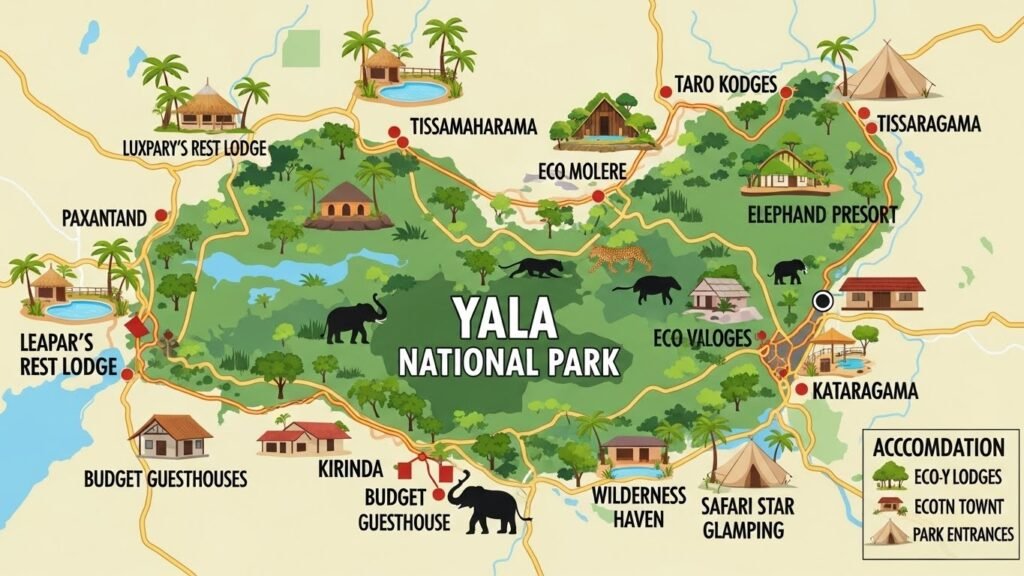
Choosing where to stay can significantly impact your Yala National Park experience. The right accommodation balances proximity to the park gates, comfort level, budget, and the type of experience you’re seeking. From basic guesthouses to ultra-luxury tented camps, the Yala region offers options for every traveler. Understanding the Geography Most accommodations cluster around three main areas, each with distinct advantages: Tissamaharama (locally called “Tissa”) is the primary gateway town, located about 5 kilometers from the park’s main entrance. This bustling market town offers the widest range of accommodation, from budget guesthouses to mid-range hotels, plus restaurants, shops, and tour operators. The drive to the park gate takes 10-15 minutes. Kirinda is a small coastal village about 10 kilometers from the main park entrance, offering a quieter, more remote feel with beach access. Several mid-range and luxury properties have established themselves here, appealing to travelers who want to combine safari experiences with seaside relaxation. Palatupana sits directly adjacent to the park boundary, offering the closest possible proximity to Yala. Properties here range from camping sites to exclusive luxury lodges. The major advantage is minimal travel time to the park entrance—some properties are literally steps away from the gates. Budget Accommodations (Under $50 per night) Guesthouses in Tissamaharama Tissa’s backpacker quarter offers dozens of small, family-run guesthouses that provide excellent value for budget-conscious travelers. These typically feature simple, clean rooms with private bathrooms, ceiling fans (air conditioning available for a small supplement), and home-cooked meals. What to expect: Most budget guesthouses are family homes where owners have converted rooms or built small annexes for guests. You’ll experience genuine Sri Lankan hospitality, with hosts often going out of their way to arrange safaris, share local knowledge, and prepare authentic home cooking. Rooms are basic but functional—don’t expect luxury amenities, designer decor, or resort facilities. Typical amenities: Private bathroom with hot water (usually), Wi-Fi (often unreliable), breakfast included, and assistance booking safaris. Many offer lunch packets for full-day safaris and can arrange laundry service. Rooms usually have mosquito nets, essential fans, and basic furniture. Safari arrangements: Budget guesthouses typically work with specific jeep operators and earn commissions on bookings. This doesn’t necessarily mean you’re getting a bad deal—many have long-standing relationships with skilled drivers—but shop around and compare prices. Expect to pay $50-80 for a half-day shared jeep safari or $90-150 for a private jeep. Location considerations: Most budget guesthouses sit within walking distance of Tissa’s lake, shops, and restaurants. The 5-kilometer distance from the park means early morning departures require waking around 5:00-5:15 AM for a 6:00 AM park entry. Best for: Backpackers, solo travelers, budget-conscious families, and those who prioritize spending on safaris over accommodation luxury. Camping Options Several operators offer camping experiences near Yala, ranging from very basic to “glamping” setups. Budget camping typically provides tents, sleeping bags, and shared bathroom facilities. Expect to pay $20-40 per person, including basic meals. What to expect: True budget camping is rustic—you’re sleeping in tents, sharing basic toilet and shower facilities, and eating simple meals cooked over campfires. It’s an adventure-oriented option best suited to young travelers or those comfortable with minimal comforts. Important considerations: Camping near Yala means camping in wildlife territory. Proper camps have safety measures in place, but you might hear elephants at night, and bathroom trips after dark require escorts. It’s thrilling but not for everyone. Mid-Range Accommodations ($50-150 per night) This category offers the best value for most travelers, combining comfort, amenities, and reasonable proximity to the park. Hotel Options in Tissamaharama Several established hotels in Tissa provide comfortable, reliable stays with more amenities than guesthouses but without luxury price tags. These properties typically feature swimming pools, restaurants, air-conditioned rooms, and professional service. What to expect: Clean, spacious rooms with modern bathrooms, air conditioning, comfortable beds, and functional furniture. Properties in this range often have gardens, swimming pools (essential after dusty safaris), restaurants serving both local and international cuisine, and sometimes small spas offering massages. Typical amenities: Air conditioning, hot water, swimming pool, restaurant and bar, Wi-Fi, room service, laundry service, and in-house safari booking assistance. Some properties have naturalist staff who conduct evening talks about Yala’s wildlife. Safari arrangements: Mid-range hotels usually have established relationships with quality jeep operators but also allow you to book independently if you prefer. Their recommended drivers tend to be experienced, and the vehicles are generally well-maintained. Best for: Couples, families, and travelers who want comfort and amenities without breaking the budget. This category offers the best balance of value, comfort, and convenience. Beach Properties Near Kirinda Several properties along the coast near Kirinda offer the unique combination of safari access and beach relaxation. These tend toward the upper end of mid-range pricing but provide excellent value for travelers wanting variety in their stay. What to expect: Beachfront or near-beach locations, ocean views from some rooms, pools, restaurants, and a more resort-like atmosphere than Tissa accommodations. The coastal setting provides cooling breezes and opportunities for beach walks, though swimming can be challenging due to strong currents. Travel considerations: The 25-30 minute drive to Yala’s main entrance means earlier morning wake-ups, but many travelers find the trade-off worthwhile for the coastal setting and typically quieter, more spacious properties. Best for: Travelers combining safaris with beach time, those who prefer resort-style properties, and visitors who don’t mind the slightly longer drive to the park in exchange for oceanfront settings. Luxury Accommodations ($150-400+ per night) Yala’s luxury segment has grown significantly, with several world-class properties offering exceptional experiences that extend beyond simple accommodation. Luxury Tented Camps Several high-end tented camps near Palatupana provide the ultimate safari experience: sleeping under canvas in beautifully appointed tents while hearing the sounds of the wild just beyond your walls. What to expect: These aren’t basic camping tents but spacious, permanent or semi-permanent structures with proper beds, en-suite bathrooms with hot water, air conditioning or high-quality fans, private verandas, and elegant decor. Think “Out of Africa” luxury rather than backpacker camping. Typical amenities: Spacious tented suites (30-50 square meters), four-poster
The Safari Experience
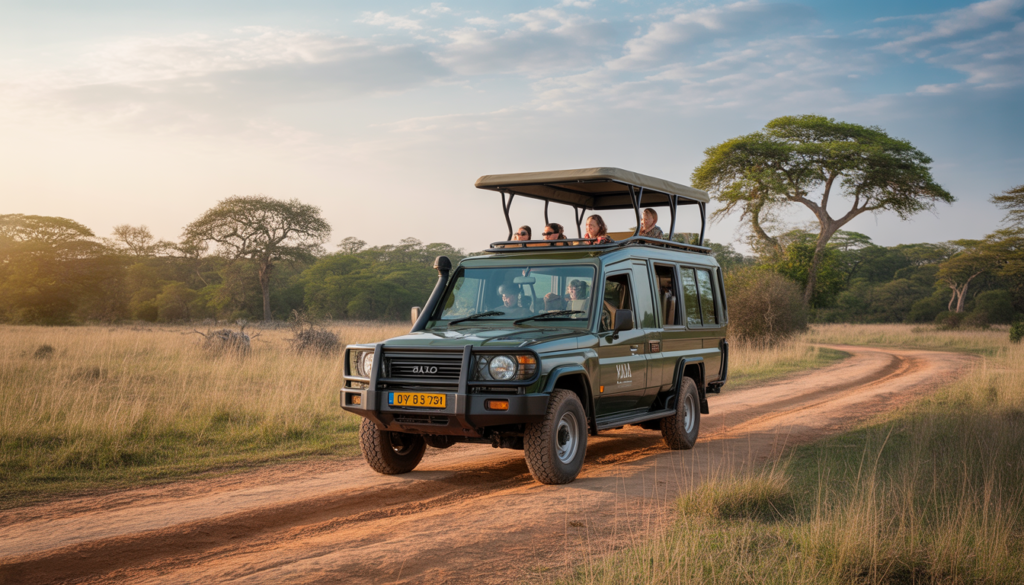
A safari in Yala typically begins in the pre-dawn darkness, as visitors gather at the park gates in open-top jeeps. As the sun rises, painting the sky in shades of orange and gold, the gates open and the adventure begins. The experience is sensory and immediate. Dust rises from the tracks as vehicles navigate the network of roads that crisscross the park. The air carries the scent of dry earth and vegetation. Every bend in the road brings anticipation, every rustle in the bushes prompts craned necks and raised cameras. Experienced safari drivers and trackers are essential to the experience. They read the landscape with practiced eyes, interpreting paw prints in the dust, alarm calls from deer, and the behavior of birds to locate wildlife. Their knowledge transforms a simple drive through the park into a masterclass in ecology and animal behavior. Most visitors explore Block 1, the park’s most accessible and wildlife-rich section, but Yala comprises five blocks, each with its own character. The more remote blocks offer quieter experiences for those willing to venture further from the crowds. Essential Safari Tips for Success What to Wear Clothing choices significantly impact your comfort during a safari. Neutral colors work best—khaki, olive green, beige, and brown help you blend into the environment and avoid startling wildlife. Avoid bright colors, particularly white (which shows dust immediately), red, and neon shades that can be visible from long distances. Long, lightweight pants and long-sleeved shirts protect against sun exposure and provide a barrier against insects and thorny vegetation if you need to brush against branches. Cotton or moisture-wicking fabrics work well in the heat. During the cooler months (December to February) or for early morning safaris year-round, bring a light jacket or fleece—temperatures can be surprisingly cool at dawn, and the wind chill in a moving vehicle adds to the cold. Footwear should be comfortable closed-toe shoes or light hiking boots. You’ll spend most of your time seated, but you may need to step out at designated spots, and the terrain can be uneven. Sandals or flip-flops are impractical and offer no protection from insects or rough ground. A wide-brimmed hat is essential for sun protection, but secure it well—the wind in a moving jeep can send hats flying. A buff or lightweight scarf serves multiple purposes: sun protection for your neck, a dust mask when vehicles kick up clouds of dirt, and warmth in the early morning. What to Pack Sunscreen is non-negotiable, even on overcast days. The tropical sun is intense, and you’ll be exposed for hours. Reapply regularly, especially on your face, neck, and arms. Sunglasses with UV protection reduce glare and eye strain, and polarized lenses help you spot wildlife near water by cutting through surface reflections. Insect repellent protects against mosquitoes and other biting insects, though mosquitoes are less of an issue during the hot, dry months. The greatest mosquito activity occurs during the green season and near dawn and dusk. Water is critical—bring at least two liters per person for a full-day safari. Dehydration happens quickly in the heat, and while most safari operators provide some water, bringing your own ensures you have enough. Avoid alcohol before or during safaris, as it accelerates dehydration. Snacks provide energy during long stretches between wildlife sightings. Pack items that won’t melt (chocolate becomes soup in Yala’s heat) and that don’t create excessive wrapper noise that might disturb animals. Nuts, dried fruit, energy bars, and cookies work well. Binoculars transform the experience, allowing you to observe distant wildlife and appreciate details invisible to the naked eye. Even basic 8×32 or 10×42 binoculars make a significant difference. Share them with travel companions if only one person brings a pair—spotting an animal and being unable to see it clearly is frustrating. A camera with a telephoto lens captures memories, though don’t let photography consume your experience. Sometimes it’s better to watch and absorb the moment rather than viewing everything through a viewfinder. Bring extra batteries and memory cards—both deplete faster than expected when shooting extensively. A bean bag or similar support helps stabilize telephoto lenses in the bouncing jeep. Safari Etiquette: Respecting Wildlife and Fellow Visitors Silence is golden when approaching wildlife. Loud conversations, shouting, and excessive noise disturb animals and ruin the experience for everyone. Speak in hushed tones, and if you must communicate, do so quietly. The rustle of a plastic bag or the beep of a camera can send skittish animals fleeing. Never ask your driver to drive off-road or closer to animals than regulations allow. Yala has designated tracks for good reason—off-road driving damages fragile ecosystems, creates erosion, and disturbs wildlife. Drivers who break these rules should be reported, not encouraged with tips. Don’t litter. This should go without saying, but unfortunately, some visitors leave trash behind. Keep all wrappers, bottles, and waste with you and dispose of them properly outside the park. Animals investigate discarded items, which can injure or poison them. Respect animal behavior and space. If an animal shows signs of stress—flattened ears on an elephant, a leopard getting up and moving away, birds giving alarm calls—ask your driver to back off. Your presence should be neutral, neither causing distress nor altering natural behavior. When multiple vehicles gather at a sighting, be patient and courteous. Everyone deserves a view and photo opportunity. Don’t block other vehicles’ sightlines, and if you’ve had time to observe and photograph, consider moving on to let others have a turn, especially if more jeeps are arriving. Stay seated and keep arms inside the vehicle unless your guide explicitly says it’s safe to stand. Animals perceive the vehicle as a single large entity; standing or extending limbs breaks that silhouette and can trigger defensive or curious responses. Never exit the vehicle except at designated picnic spots or rest areas. Maximizing Your Wildlife Sightings Book the earliest possible safari slot. The park gates open at 6:00 AM (times vary slightly by season), and being among the first vehicles in dramatically improves your
Yala National Park: Where Leopards Roam and Wilderness Thrives
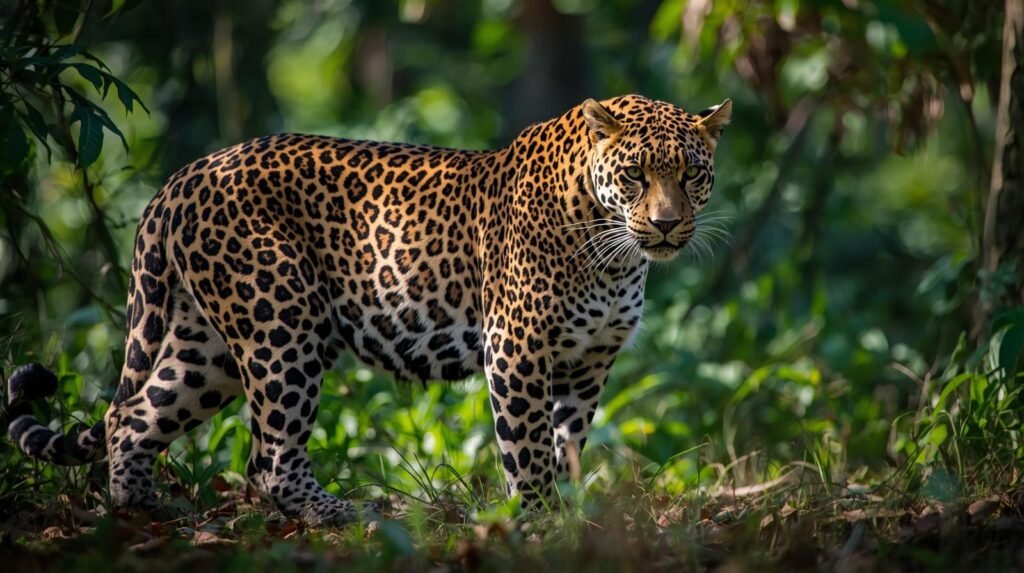
In the southeastern corner of Sri Lanka, where the island’s arid lowlands meet the Indian Ocean, lies one of Asia’s most remarkable wildlife sanctuaries. Yala National Park is a place where leopards stalk through thorny scrubland, elephants gather at ancient watering holes, and the rhythms of nature have remained largely unchanged for millennia. A Landscape Shaped by Time Yala’s 979 square kilometers encompass an extraordinary diversity of ecosystems. Thorny scrub jungle dominates much of the landscape, interspersed with grasslands, brackish lagoons, and rocky outcrops that rise dramatically from the flat terrain. Along the coast, golden beaches give way to the azure waters of the Indian Ocean, creating a striking contrast with the dusty interior. The park’s geology tells a story millions of years in the making. Ancient rock formations dot the landscape, some bearing inscriptions that hint at human presence dating back over two thousand years. These rocks, weathered by wind and rain, now serve as lookout points for leopards surveying their domain and provide shade for resting elephants during the scorching midday heat. The Leopard’s Kingdom Yala holds the distinction of having one of the highest leopard densities in the world. While these magnificent cats are notoriously elusive elsewhere, here they’ve adapted to the open terrain, making Yala one of the best places on Earth to observe leopards in the wild. The park is estimated to host around 40 to 50 leopards in its most visited block alone, translating to densities that can reach one leopard per square kilometer in prime habitat. Unlike their African cousins who must compete with lions for prey, Sri Lankan leopards are apex predators with no natural rivals. This unique position has shaped their behavior in fascinating ways, creating what researchers call the “king of the jungle” phenomenon. Without the need to surrender kills to larger predators or haul prey into trees for safekeeping, Yala’s leopards display behavioral patterns rarely seen elsewhere in the leopard world. The most striking difference is their daytime activity. While leopards in Africa and India are predominantly nocturnal, avoiding the heat and larger predators, Yala’s leopards are frequently active during daylight hours. Morning safaris often reveal leopards on the move: a female stalking spotted deer through the scrub, a male patrolling the boundaries of his territory, or a young adult practicing hunting techniques on unsuspecting prey. Their hunting strategies reflect the park’s open landscape. In dense forests, leopards rely on close-range ambush, but Yala’s leopards have adapted to longer stalks across more exposed terrain. They use the contours of the land masterfully, approaching from downwind and utilizing every rock, termite mound, and bush for cover. The final rush can cover 50 meters or more, with the leopard reaching speeds of up to 58 kilometers per hour in short bursts. Prey selection in Yala is diverse and opportunistic. Spotted deer, or axis deer, form the primary prey base, comprising about 70 percent of leopard kills. These graceful herbivores are abundant throughout the park, and leopards have developed an intimate knowledge of their behavior patterns. Wild boar, despite their formidable tusks and aggressive defense, are also taken regularly, particularly by larger male leopards. Smaller prey items include hares, porcupines, and even monitor lizards during lean times. What makes Yala’s leopards truly exceptional is their tolerance of human presence. Generations of leopards have grown accustomed to safari vehicles, learning that these noisy but predictable intrusions pose no threat. This habituation allows for observations that would be impossible elsewhere. Leopards will rest in the open, walk along roads with barely a glance at onlookers, and even make kills within view of vehicles. This comfort around humans has revealed intimate details of leopard social structure. Males maintain large territories that overlap with those of several females, marking boundaries with scrapes, urine, and scratch marks on trees. Unlike the solitary stereotype, leopards have complex social lives. Males and females come together not just for breeding but occasionally share kills, particularly between mothers and their nearly independent offspring. These reunions, tender and brief, offer glimpses into the emotional lives of these powerful predators. Female leopards in Yala typically give birth to two cubs, though litter sizes can range from one to three. The cubs, born blind and helpless, spend their first weeks hidden in rocky dens or thick vegetation. By three months, they begin accompanying their mother, learning the skills they’ll need to survive. This apprenticeship lasts 18 to 24 months, during which young leopards master hunting, territorial awareness, and the subtle art of reading the landscape. Researchers have identified and tracked individual leopards in Yala for years, recognizing them by their unique spot patterns. These longitudinal studies have revealed fascinating details: territorial shifts following the death of dominant males, the ranging behavior of dispersing juveniles, and even evidence of cooperative behavior between related females. One famous leopard, a female known to researchers and guides for her boldness and successful hunting, held a prime territory near the park’s main waterhole for over a decade, raising multiple litters and becoming legendary among regular visitors. The rocky outcrops scattered throughout Yala serve as crucial features in leopard ecology. These granite formations provide elevated vantage points for spotting prey, cool retreats during the midday heat, and secure denning sites for raising cubs. A leopard draped across a sun-warmed rock, backlit by the golden afternoon light, has become an iconic image of Yala, captured by countless photographers and seared into the memories of fortunate visitors. For visitors, spotting a leopard remains a thrilling possibility rather than a guarantee, but the odds here are better than almost anywhere else. Patient observers are often rewarded with extraordinary sightings: a mother teaching her cubs to hunt, a male marking his territory with deliberate scrapes and scent marks, the heart-stopping moment when a leopard emerges from the undergrowth just meters from a safari vehicle, or the rare privilege of witnessing a successful hunt from stalk to kill. Beyond the Leopard While leopards may be the star attraction, Yala’s supporting cast is equally impressive.
Yala National Park is Sri Lanka’s most famous wildlife reserve and one of the best destinations in Asia
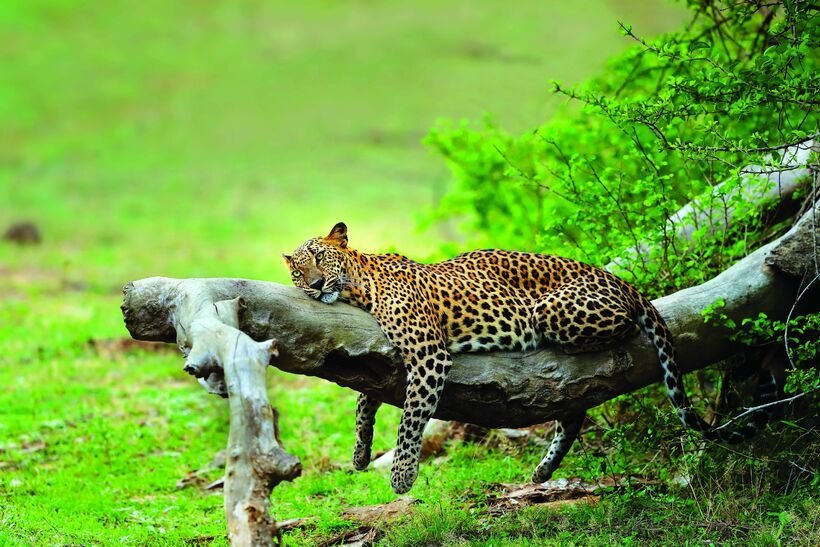
Located in the southeastern region of the island, bordering the Indian Ocean, Yala National Park covers an area of nearly 979 square kilometers. The park is a remarkable combination of dry forests, open grasslands, scrub jungle, lagoons, and coastal ecosystems, making it one of the most diverse national parks in the country. Yala is internationally renowned for having one of the highest densities of leopards in the world. The Sri Lankan leopard (Panthera pardus kotiya), an endemic subspecies, is the park’s most iconic resident and a major attraction for wildlife enthusiasts and photographers. In addition to leopards, Yala is home to a wide variety of animals, including Asian elephants, sloth bears, spotted deer, sambar deer, wild boar, water buffalo, mugger crocodiles, and golden jackals. The park is also a paradise for bird lovers, with over 200 recorded bird species, including migratory birds, peacocks, eagles, herons, and storks. Yala National Park is divided into several blocks, with Block 1 being the most popular and frequently visited due to its high wildlife concentration. Other blocks offer quieter and more secluded safari experiences, allowing visitors to enjoy nature with fewer crowds. Safari tours are conducted in specially designed 4×4 jeeps, guided by experienced drivers who have extensive knowledge of animal behavior and the park’s terrain. Beyond its wildlife, Yala holds great historical and cultural significance. Scattered throughout the park are ancient ruins of Buddhist monasteries, stupas, and inscriptions that date back over 2,000 years. Yala National Park is Sri Lanka’s most famous wildlife reserve and one of the best destinations in Asia for experiencing nature and wildlife in their purest form. These remains reveal that the area was once home to thriving ancient civilizations that lived in harmony with nature. The combination of wildlife and history makes Yala a unique destination where natural beauty and cultural heritage coexist. Yala National Park also plays a vital role in conservation and environmental protection in Sri Lanka. As a protected area, it helps preserve endangered species and delicate ecosystems while promoting responsible tourism. Strict regulations are in place to minimize human impact, ensuring that future generations can continue to enjoy the park’s natural wonders. Visitors can choose from morning, afternoon, or full-day safari experiences, each offering a different perspective of the park. Early morning safaris are particularly popular, as animals are more active during the cooler hours, providing excellent opportunities for wildlife sightings and photography. In conclusion, Yala National Park is more than just a safari destination—it is a symbol of Sri Lanka’s rich biodiversity and natural heritage. Whether you are a wildlife lover, photographer, nature enthusiast, or traveler seeking adventure, Yala National Park offers an unforgettable experience that showcases the true beauty of Sri Lanka’s wilderness.